Dog Park vs. Professional Dog Walks: Which Is Better for Your Dog?By Grove Street Hounds | Jersey City Dog Walking
Are dog parks always the best choice for exercise? Learn the pros and cons of dog parks versus structured professional walks, and discover why many dogs thrive on calm, enriching daily walks with Grove Street Hounds in Jersey City.
Every dog owner wants the same thing—a happy, healthy dog that gets plenty of exercise and social interaction. One question we hear often at Grove Street Hounds is whether dogs benefit more from visiting a dog park or going on structured walks with a professional dog walker.
The truth is that both can have benefits, but they serve very different purposes. Understanding those differences can help you choose what's best for your dog's personality, age, and energy level.
What a Dog Park Offers
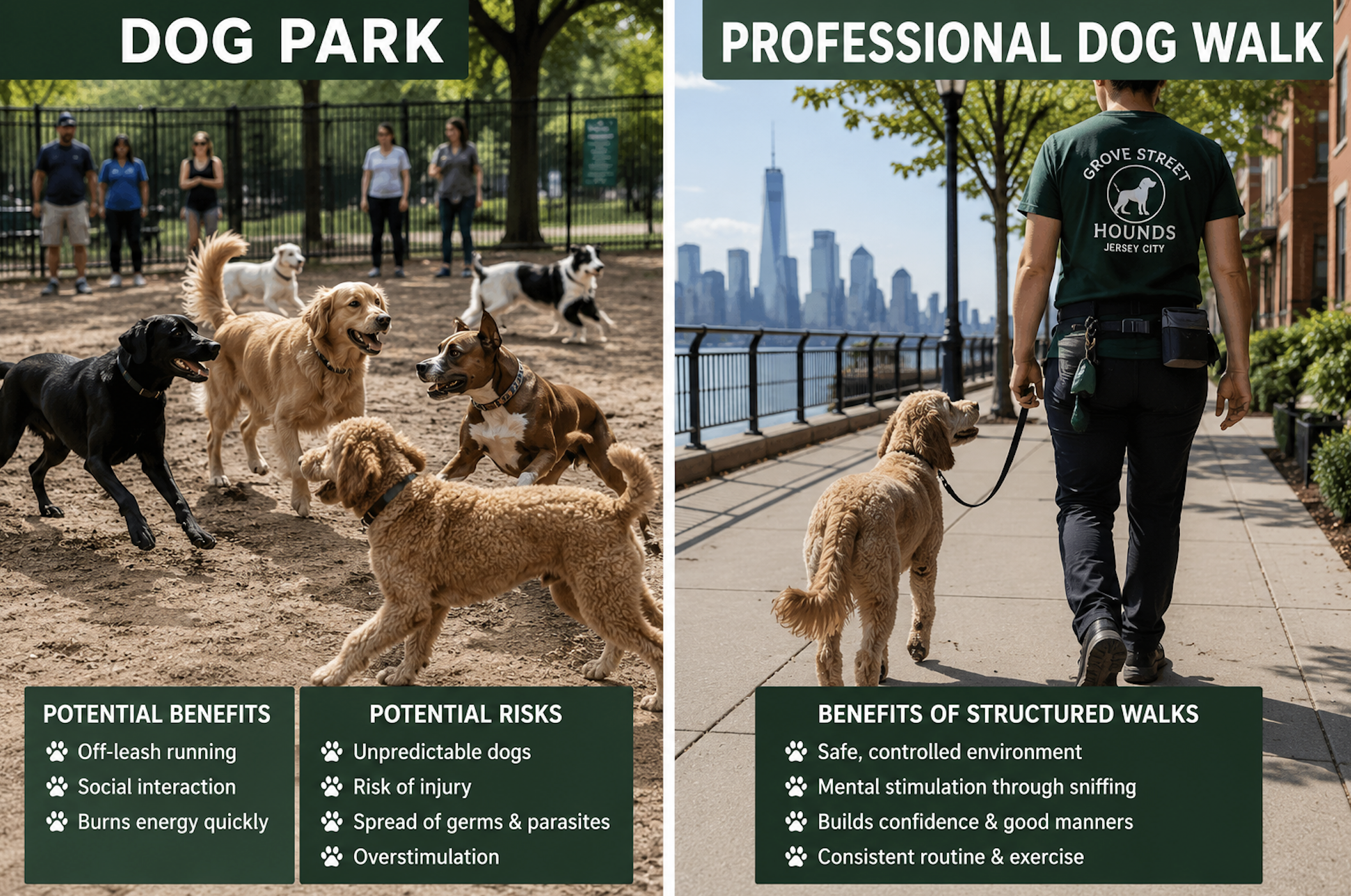
Dog parks can provide an opportunity for dogs to run freely, play, and interact with other dogs. For confident, social dogs that enjoy group play, a well-managed dog park can be a fun experience.
Potential benefits include:
Off-leash running
Social interaction with other dogs
Opportunities to burn energy quickly
New sights and smells
However, not every dog enjoys this environment.
The Hidden Risks of Dog Parks
While dog parks can be enjoyable, they also come with challenges that many owners don't consider.
Unpredictable Dogs
You have no control over the training or temperament of the other dogs entering the park. Even friendly dogs can become overstimulated in a crowded environment.
One dog becoming frightened or defensive can quickly escalate into a fight.
Poor Manners Can Spread
Dogs often learn behaviors from one another.
Jumping, rough play, excessive barking, and ignoring recalls can all become reinforced when dogs repeatedly interact in chaotic environments.
Injury Risk
Fast-running dogs, wrestling, and crowded entrances increase the risk of:
Muscle strains
Torn nails
Scratches
Bite wounds
Accidental collisions
Even friendly play can sometimes become too rough.
Disease and Parasites
Shared water bowls, standing water, and areas with heavy dog traffic may increase exposure to:
Kennel cough
Intestinal parasites
Fleas and ticks
Canine influenza
Keeping vaccinations current helps reduce risk but cannot eliminate it entirely.
Why Structured Walks Are Different
Professional dog walks focus on creating a calm, mentally enriching experience rather than simply tiring a dog out.
A quality walk allows your dog to:
Explore safely
Sniff and investigate their environment
Practice loose-leash walking
Build confidence
Maintain a predictable routine
Mental stimulation is just as important as physical exercise.
Many dogs return home more relaxed after a thoughtful walk than after an hour of chaotic play.
The Importance of Sniffing
Dogs experience the world primarily through their noses.
Allowing a dog to stop and sniff during appropriate moments:
Lowers stress
Provides mental stimulation
Builds confidence
Helps satisfy natural instincts
At Grove Street Hounds, we believe walks should never be a race. Taking time to safely explore the environment is one of the healthiest parts of a dog's day.
Which Dogs Usually Benefit More From Walks?
Structured walks are often ideal for:
Puppies still learning manners
Senior dogs
Reactive dogs
Nervous or shy dogs
Dogs recovering from injury
Dogs living in apartments
Dogs that become overwhelmed by large groups
Many owners assume every dog wants dozens of canine friends. In reality, plenty of dogs are happiest walking peacefully with a trusted human.
When Dog Parks Can Be a Good Choice
Dog parks may be appropriate for dogs that:
Have excellent recall
Enjoy playing appropriately with other dogs
Are healthy and vaccinated
Can read canine body language well
Leave the park relaxed instead of overstimulated
Even then, shorter visits during less crowded times are often safer than busy weekend afternoons.
Finding the Right Balance
For many families, the best routine includes mostly structured walks with the occasional dog park visit if their dog truly enjoys it.
Regular walks provide:
Consistent exercise
Mental enrichment
Confidence building
Better leash manners
A reliable daily routine
Dog parks can simply be an occasional bonus—not the primary source of exercise.
Grove Street Hounds' Philosophy
At Grove Street Hounds, we believe every walk should be tailored to the individual dog.
Our focus is on calm, structured walks throughout Downtown Jersey City where dogs can safely explore, sniff, and enjoy their surroundings without unnecessary stress or unpredictable encounters.
Whether your dog is young, senior, energetic, or simply enjoys a peaceful stroll, our goal is to provide exercise that benefits both their body and their mind.
If you're looking for a professional dog walker in Jersey City who understands canine behavior and prioritizes your dog's safety and well-being, we'd love to meet you.
Why Dogs Should Never Meet Face-to-Face on a Leash
Many dog owners believe every dog should stop and greet one another on walks, but face-to-face leash greetings can actually increase stress and lead to unwanted behavior. Learn why professional dog walkers often keep dogs moving and how calm leash etiquette creates safer, happier walks.
Understanding Leash Etiquette for Safer, Happier Walks with Grove Street Hounds
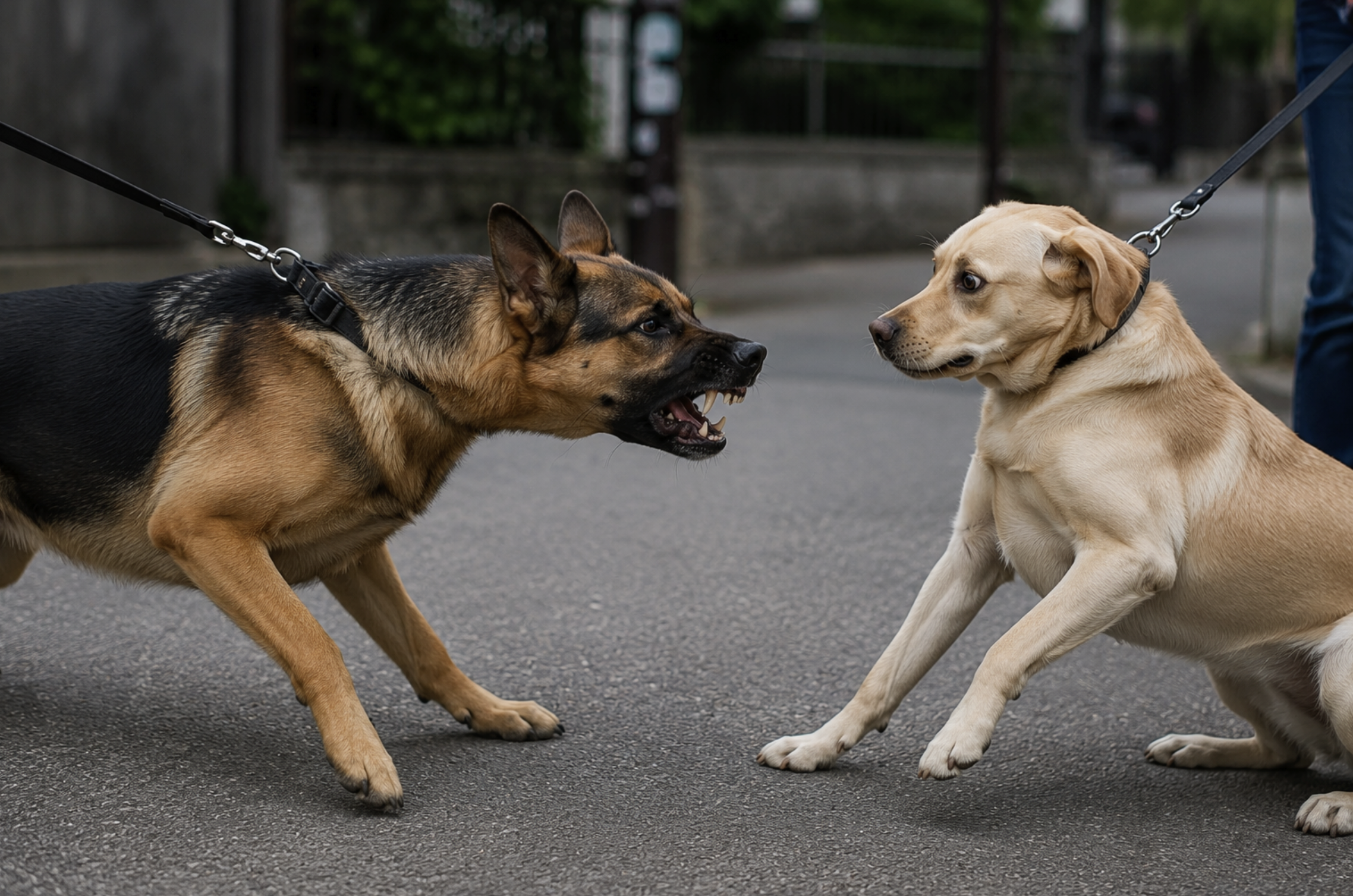
One of the most common misconceptions among dog owners is that every dog wants to say hello to every other dog they meet on a walk. While it may seem friendly or harmless, allowing dogs to greet each other face-to-face while they're both on leashes is one of the leading causes of leash reactivity, anxiety, and even dog fights.
At Grove Street Hounds, we often see owners who are surprised when a normally friendly dog suddenly growls, lunges, or snaps during what was meant to be a simple greeting. The truth is that the leash changes everything.
Why Face-to-Face Greetings Can Be Stressful
Dogs communicate through body language. In natural settings, dogs rarely approach one another head-on. Instead, they typically move in gentle arcs, sniff from the side, and have the freedom to create space if they feel uncomfortable.
A leash removes many of those options.
When two dogs are pulled directly toward one another on tight leashes, they lose the ability to communicate naturally. This can make even friendly dogs feel trapped, defensive, or overly excited.
The Leash Adds Tension
Many owners unknowingly tighten the leash as another dog approaches.
Unfortunately, dogs are incredibly sensitive to leash pressure.
A tight leash can:
Increase frustration
Restrict natural movement
Signal to your dog that something is wrong
Prevent them from calmly walking away if they feel uncomfortable
Sometimes the tension you're feeling travels straight down the leash to your dog.
Not Every Dog Wants to Say Hello
Just because a dog is out for a walk doesn't mean they're looking to make new friends.
The other dog could be:
Recovering from surgery
In training
Elderly and uncomfortable
Fearful of unfamiliar dogs
Reactive after a previous bad experience
Simply enjoying a peaceful walk
Respecting another dog's space is one of the best things you can do as a responsible dog owner.
Learn to Read Body Language
Before allowing any interaction, pay attention to what both dogs are communicating.
Relaxed, friendly signs:
Loose, wiggly body
Soft eyes
Curved approach
Relaxed tail wagging
Play bow
Warning signs:
Stiff body posture
Hard staring
Tail held high and rigid
Raised hackles
Lip licking or yawning from stress
Freezing in place
Growling
If either dog shows signs of discomfort, it's best to continue walking.
Passing Another Dog Calmly
Rather than stopping for every greeting, many trainers recommend simply continuing your walk.
Reward your dog for:
Looking at you
Walking politely beside you
Remaining calm while another dog passes
This builds confidence and teaches your dog that not every passing dog requires an interaction.
Are Off-Leash Greetings Different?
In secure, supervised environments where dogs can move freely and choose their own interactions, greetings are often much more natural.
Dogs can:
Approach from the side
Walk away if they're uncomfortable
Use normal body language without leash restrictions
Even then, introductions should always be monitored carefully.
How Grove Street Hounds Handles Dog Encounters
At Grove Street Hounds, our priority is keeping every walk safe, calm, and enjoyable.
When passing another dog, we focus on maintaining a relaxed pace, giving both dogs plenty of space, and rewarding calm behavior rather than encouraging unnecessary greetings. Every dog has a different comfort level, and respecting those boundaries helps build confidence while reducing stress.
A peaceful walk isn't about meeting every dog along the way—it's about providing exercise, mental stimulation, and positive experiences that leave your dog happier and more relaxed when they return home.
Whether we're walking through the Grove Street neighborhood, Van Vorst Park, Paulus Hook, or along the Hudson River waterfront, our goal is always the same: safe, structured walks that put your dog's well-being first.
Final Thoughts
One of the best gifts you can give your dog is learning when not to say hello.
By allowing your dog to pass other dogs calmly, respecting personal space, and recognizing body language, you'll help prevent unwanted conflicts while building confidence and trust on every walk.
At Grove Street Hounds, we believe that a successful walk isn't measured by how many dogs your pup meets—it's measured by how safe, relaxed, and happy they feel every step of the way.