How to Help a Rescue Dog Adjust to a New Home and Neighborhood - Grove Street Hounds | Downtown Jersey City Dog Walking
Bringing home a rescue dog? Learn how to help your new companion adjust to their home and neighborhood with expert tips on routines, confidence building, and safe socialization from Grove Street Hounds in Downtown Jersey City.
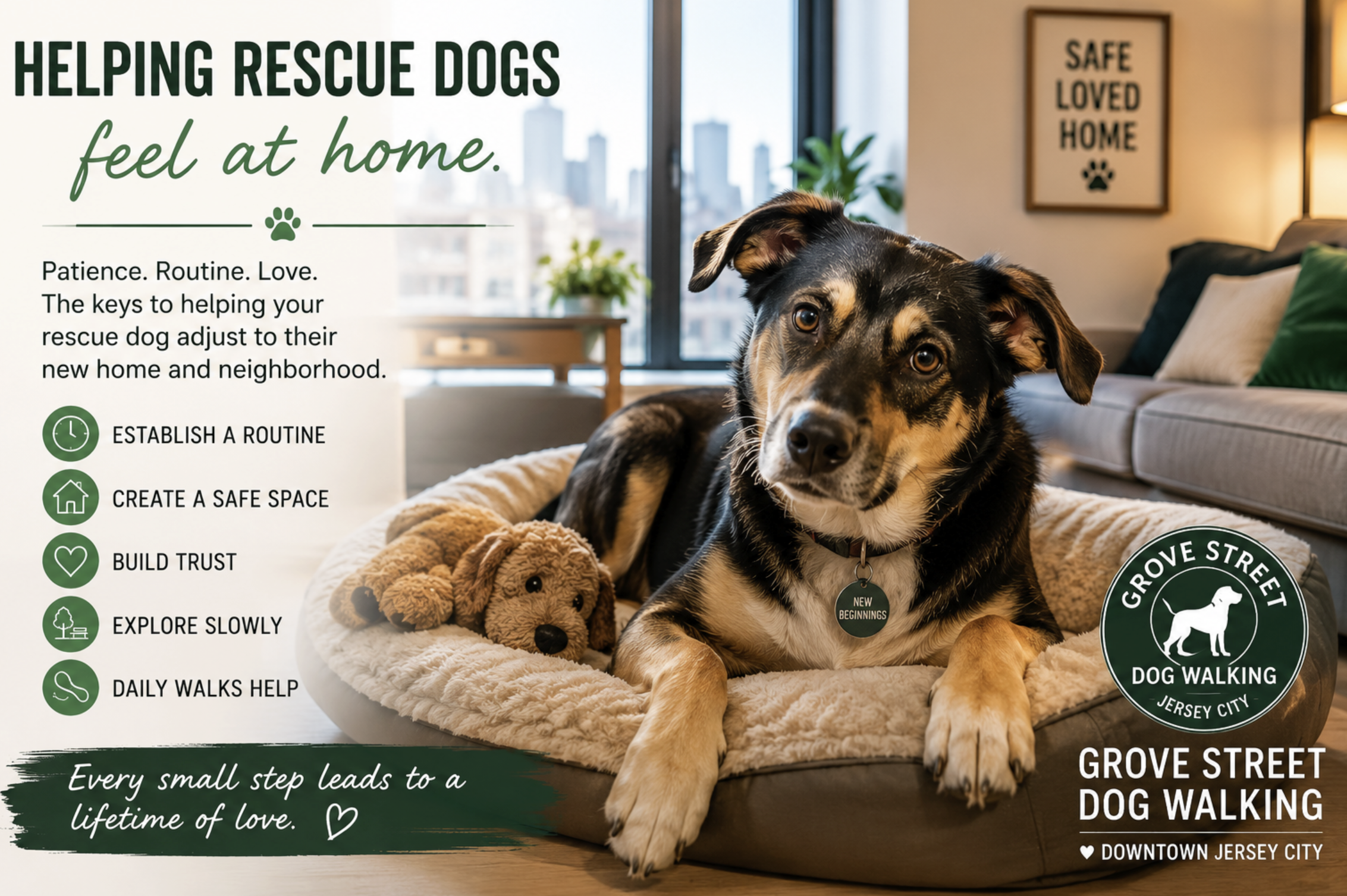
Bringing home a rescue dog is one of the most rewarding experiences a person can have. Whether your new companion comes from a shelter, foster home, or rescue organization, they're entering an entirely unfamiliar world. New smells, new people, new sounds, and a new routine can feel overwhelming.
At Grove Street Hounds | Downtown Jersey City Dog Walking, we've worked with many rescue dogs throughout Jersey City and understand that patience, consistency, and structure are the keys to helping them build confidence.
Every rescue dog adjusts at their own pace, but there are several ways you can make the transition smoother.
Give Your Dog Time to Decompress
It's tempting to immediately introduce your new dog to every friend, family member, dog park, and neighborhood hotspot.
Instead, keep life simple during the first few weeks.
Allow your dog to quietly observe their new surroundings without constant excitement.
Many rescue dogs need time to simply relax and realize they're finally safe.
Create a Predictable Routine
One of the fastest ways to build trust is through consistency.
Try to keep:
Morning walks around the same time
Feeding schedules consistent
Bedtime predictable
Bathroom breaks regular
Quiet time every day
Dogs quickly learn patterns, and knowing what to expect helps reduce anxiety.
Introduce the Neighborhood Slowly
Downtown Jersey City offers wonderful places to walk, but a rescue dog doesn't need to experience everything at once.
Instead of taking long, busy walks immediately:
Start with quiet residential streets.
Allow frequent sniffing breaks.
Keep early walks shorter.
Gradually increase distance each week.
Let your dog build confidence at their own pace.
Don't Force Greetings
Many people naturally want to pet a new rescue dog.
However, not every dog is ready.
Allow your dog to choose whether they want to interact.
Avoid forcing greetings with:
Other dogs
Children
Strangers
Large groups
Confidence grows much faster when dogs feel they have choices.
Let Them Sniff
A dog's nose is how they gather information.
Every tree, sidewalk, and patch of grass tells a story.
Allowing your dog to sniff during walks:
Builds confidence
Reduces stress
Provides mental stimulation
Helps them learn their new environment
At Grove Street Hounds, we believe sniffing isn't wasting time—it's one of the most important parts of every walk.
Watch Body Language
Your rescue dog will tell you how they're feeling long before they bark or growl.
Watch for signs like:
Lip licking
Yawning
Tail tucked
Turning away
Whale eye (showing the whites of the eyes)
Freezing in place
These are often early signs that your dog is uncomfortable.
Recognizing them allows you to create more positive experiences.
Keep Visitors Limited
While everyone may be excited to meet your new family member, too many visitors can become overwhelming.
For the first couple of weeks:
Limit guests.
Keep introductions calm.
Allow your dog to retreat to a quiet space if they choose.
Remember, trust takes time.
Exercise Builds Confidence
Regular walks aren't only about burning energy.
They help rescue dogs:
Learn their neighborhood
Build positive routines
Gain confidence
Reduce anxiety
Strengthen the bond with their handler
Even a 30-minute structured walk each day can make a tremendous difference.
Celebrate Small Victories
Progress isn't always measured in big milestones.
Sometimes success looks like:
Walking calmly past another dog
Relaxing during a walk
Taking treats outside
Sleeping peacefully through the night
Feeling comfortable in an elevator
Exploring a new street with confidence
Celebrate every step forward.
Be Patient
Many trainers refer to the 3-3-3 Rule:
First 3 days: Your dog is adjusting and may feel overwhelmed.
First 3 weeks: They're beginning to settle into a routine.
First 3 months: They often start feeling truly at home.
Every rescue dog is different, so don't compare your dog's journey to anyone else's.
How Grove Street Hounds Can Help
At Grove Street Hounds | Downtown Jersey City Dog Walking, we understand that rescue dogs often need more than just exercise.
They need calm leadership, patience, consistency, and positive experiences.
Our walks focus on:
Building confidence
Safe exploration
Mental enrichment
Gentle exposure to the neighborhood
Creating dependable daily routines
Whether your rescue dog is shy, energetic, or simply learning to trust again, we're committed to helping them thrive one walk at a time.
Final Thoughts
Adopting a rescue dog is the beginning of an incredible journey.
With patience, structure, and consistent care, most rescue dogs blossom into loyal, loving companions.
Every calm walk, every predictable routine, and every positive experience helps build the confidence your dog needs to truly feel at home.
At Grove Street Hounds, we're honored to help rescue dogs throughout Downtown Jersey City take those important first steps toward a happy, secure future.
Why Routine Is One of the Greatest Gifts You Can Give Your DogWritten by Grove Street Hounds | Jersey City Dog Walking
Dogs thrive on routine. Learn why consistent walks, feeding schedules, and daily structure improve your dog's behavior, reduce anxiety, and promote better health. Written by Grove Street Hounds | Jersey City Dog Walking.
If you've ever noticed your dog waiting by the door before it's time for a walk or getting excited every day around the same hour, you've already witnessed the power of routine.
Dogs thrive on consistency. While they certainly enjoy surprises from time to time, their emotional well-being, confidence, and overall health are built around knowing what to expect. At Grove Street Hounds | Jersey City Dog Walking, we've seen firsthand how a predictable daily routine can transform even the most anxious or energetic dogs into calmer, happier companions.
Why Dogs Love Routine
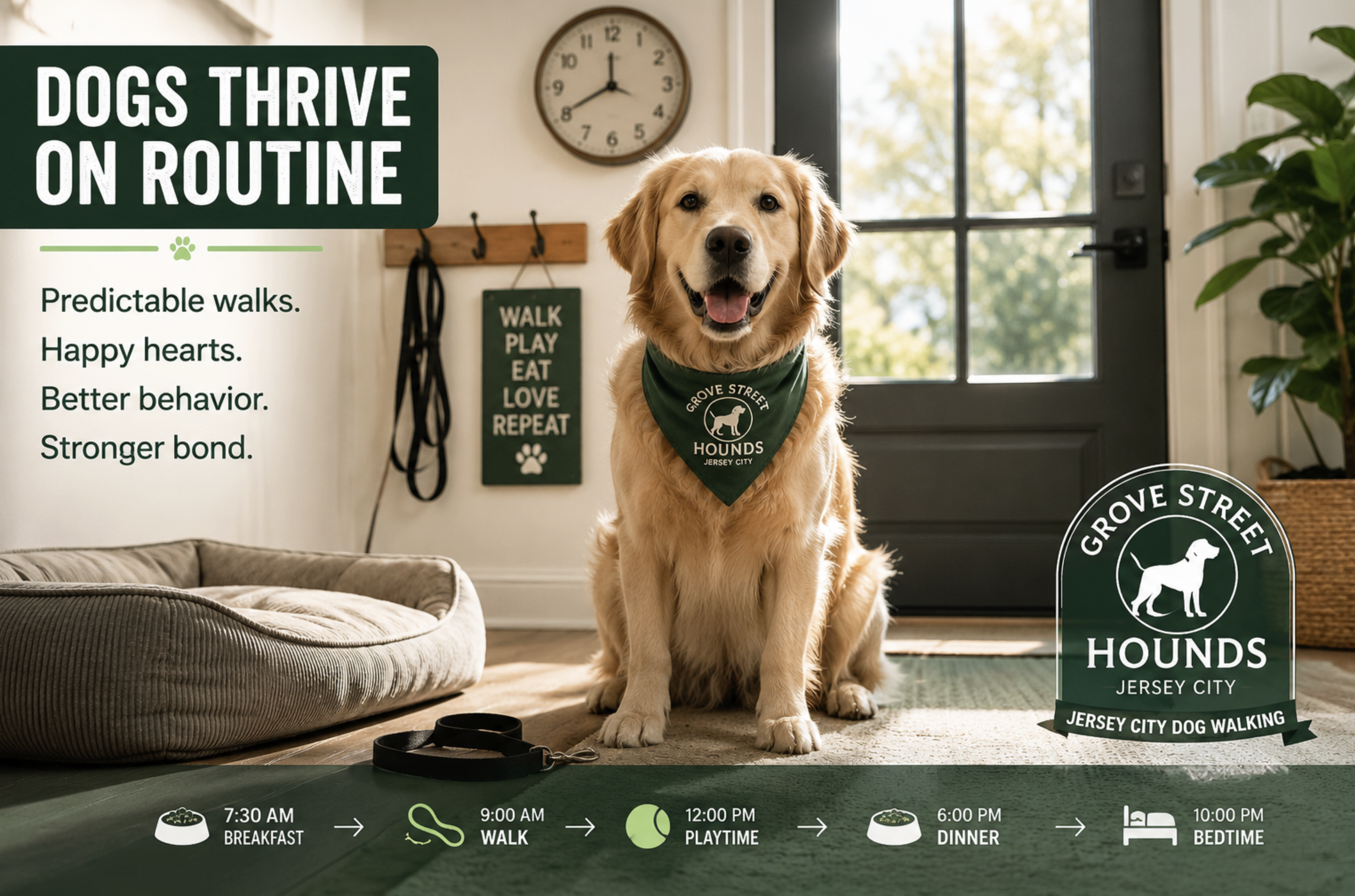
Unlike humans, dogs don't understand calendars or clocks. Instead, they rely on patterns and repetition to understand their world.
When feeding times, walks, playtime, and bedtime happen consistently, dogs begin to feel secure because they know their needs will be met.
A consistent routine helps reduce uncertainty, which is one of the biggest contributors to canine stress.
Routine Reduces Anxiety
Many dogs struggle with anxiety when life feels unpredictable.
Changes in schedule, missed walks, inconsistent meal times, or long periods alone can cause dogs to become stressed.
Some common signs include:
Excessive barking
Pacing
Whining
Destructive chewing
Restlessness
House accidents
Difficulty settling down
Maintaining a regular walking schedule gives dogs something they can count on each day.
Better Physical Health
Regular exercise isn't just about burning energy.
Consistent walks help maintain:
Healthy body weight
Strong muscles and joints
Better cardiovascular health
Improved digestion
More restful sleep
Even moderate daily walks often provide greater long-term health benefits than occasional bursts of intense activity.
Mental Stimulation Matters
Walking isn't simply exercise.
Every walk gives your dog an opportunity to:
Explore new scents
Observe their environment
Solve little "puzzles" through sniffing
Experience different sounds and sights
Mental stimulation is just as tiring as physical exercise.
Many dogs return home more relaxed after a calm, sniff-filled walk than after simply running around for a few minutes.
Puppies Benefit Even More
Young dogs are constantly learning.
A predictable routine helps puppies understand:
Potty schedules
Meal times
Nap times
Walking expectations
Household rules
Consistency speeds up training and builds confidence during a very important stage of development.
Senior Dogs Need Predictability
Older dogs often become even more dependent on routine.
As dogs age, they may experience:
Arthritis
Vision changes
Hearing loss
Mild cognitive decline
Keeping walks and meals on a consistent schedule helps senior dogs feel more comfortable and secure.
Apartment Dogs Need Daily Structure
Living in an apartment means dogs depend almost entirely on their owners for outdoor time.
In busy cities like Jersey City, regular walks become especially important.
A structured schedule provides:
Bathroom breaks
Mental enrichment
Physical exercise
Relief from boredom
Opportunities to safely explore the neighborhood
For apartment dogs, daily walks are often the highlight of the day.
Routine Helps Improve Behavior
Many behavior problems begin when dogs become bored or frustrated.
Consistent walks often help reduce:
Jumping
Excessive barking
Destructive chewing
Pulling on the leash
Hyperactivity indoors
A dog whose physical and mental needs are consistently met is often much easier to live with.
Life Gets Busy—And That's Okay
Work schedules, meetings, travel, and unexpected responsibilities can make it difficult to maintain the same routine every day.
That's where a professional dog walker can make a real difference.
Knowing your dog receives a dependable walk at the same time each day helps maintain the consistency that dogs naturally crave—even when life becomes hectic.
Grove Street Hounds' Approach
At Grove Street Hounds | Jersey City Dog Walking, we believe every walk is more than just exercise.
We focus on creating calm, dependable routines that help dogs feel confident, relaxed, and excited about their day.
Whether your dog is a playful puppy, an active adult, or a gentle senior, consistent care and structured walks provide benefits that last far beyond the walk itself.
Our goal is simple: to help every dog in our care enjoy a healthier, happier, and more predictable life—one walk at a time.
Final Thoughts
Routine may seem simple, but for dogs, it's one of the greatest gifts you can provide.
A consistent schedule builds trust, reduces anxiety, improves behavior, supports physical health, and gives dogs the confidence to enjoy the world around them.
Whether you're walking your dog yourself or relying on a trusted professional, consistency is one of the most important ingredients in a happy life.