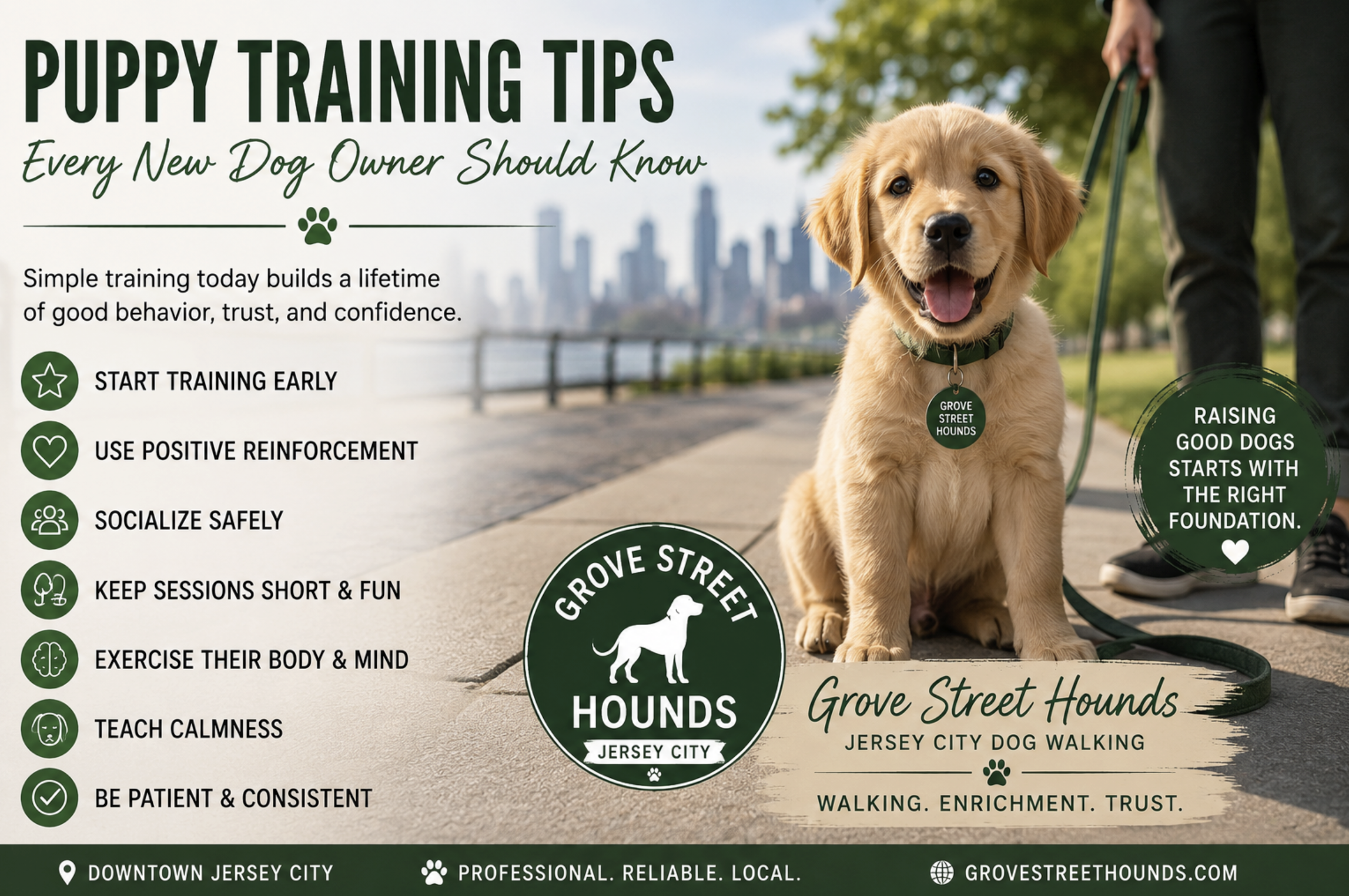
Puppy Training Tips Every New Dog Owner Should Know | Written by Grove Street Hounds – Jersey City Dog Walking
Discover essential puppy training tips that help build confidence, good manners, and healthy habits from day one. Written by Grove Street Hounds – Jersey City Dog Walking.
Introduction
Bringing home a new puppy is one of life's most exciting experiences, but it also comes with plenty of challenges. Puppies are curious, energetic, and constantly learning about the world around them. The habits they develop during their first few months can shape their behavior for years to come.
At Grove Street Hounds – Jersey City Dog Walking, we work with dogs of all ages, and we've seen firsthand how a strong foundation in puppy training leads to happier, more confident dogs. Whether you're raising your first puppy or adding another four-legged family member, these simple training tips will help set your puppy up for success.
1. Start Training Immediately
Many people think puppies need to be older before training begins. In reality, training starts the day your puppy comes home.
Simple lessons such as:
Learning their name
Coming when called
Sitting politely
Walking calmly on a leash
Waiting at doors
can begin as early as 8 weeks of age using positive reinforcement.
2. Keep Training Sessions Short
Puppies have short attention spans.
Aim for:
5–10 minute sessions
Several times throughout the day
Ending on a positive note
Frequent, fun practice is much more effective than one long training session.
3. Reward Good Behavior
Dogs repeat behaviors that earn rewards.
Use:
Small treats
Praise
Toys
Affection
The more consistently you reward behaviors you like, the faster your puppy learns what you expect.
4. Socialize Your Puppy Safely
Socialization doesn't simply mean letting your puppy meet every dog they see.
Instead, expose them to:
Different people
City sounds
Elevators
Bikes
Strollers
Friendly dogs
New walking routes
Various surfaces like grass, concrete, wood, and gravel
Positive experiences build confidence and reduce fear later in life.
5. Don't Expect Perfection Overnight
Every puppy has accidents.
They'll chew something they shouldn't.
They'll forget commands.
That's completely normal.
Consistency and patience always outperform punishment.
6. Make Walks About Learning
Walks aren't only for exercise—they're one of the best training opportunities you have.
Allow your puppy to:
Practice loose leash walking
Explore safely
Build confidence
Experience new sights and sounds
Learn to focus despite distractions
At Grove Street Hounds, we believe every walk should be both physically and mentally enriching.
7. Teach Calmness
Many owners focus only on teaching excitement.
Teaching your puppy how to relax is equally important.
Reward calm behaviors like:
Lying quietly
Settling on a bed
Waiting patiently
Relaxing after playtime
Learning how to "do nothing" is an important life skill for every dog.
8. Stay Consistent
Dogs thrive on routine.
Use the same commands every time.
For example:
"Sit"
"Down"
"Stay"
"Come"
Avoid switching between different words for the same command, as consistency helps puppies learn faster.
9. Exercise Their Brain
Mental stimulation tires puppies just as much as physical activity.
Great enrichment ideas include:
Puzzle toys
Food-dispensing toys
Basic obedience practice
Nose work games
Hide-and-seek
Short training sessions during walks
A mentally stimulated puppy is often a calmer puppy.
10. Be Patient
Your puppy isn't trying to be difficult.
They're learning how to live in a human world.
Celebrate small victories, stay consistent, and remember that every successful adult dog was once an energetic puppy learning one step at a time.
Final Thoughts
Training a puppy isn't about creating a perfectly obedient dog overnight—it's about building trust, communication, and confidence that will last a lifetime. By staying patient, using positive reinforcement, and providing daily mental and physical exercise, you'll help your puppy grow into a happy, well-adjusted companion.
At Grove Street Hounds – Jersey City Dog Walking, we're passionate about helping dogs of every age thrive. Whether you have a young puppy learning the basics or an adult dog who benefits from consistent daily walks, we're committed to providing safe, dependable, and enriching care throughout Downtown Jersey City.

Why Routine Is One of the Greatest Gifts You Can Give Your DogWritten by Grove Street Hounds | Jersey City Dog Walking
Dogs thrive on routine. Learn why consistent walks, feeding schedules, and daily structure improve your dog's behavior, reduce anxiety, and promote better health. Written by Grove Street Hounds | Jersey City Dog Walking.
If you've ever noticed your dog waiting by the door before it's time for a walk or getting excited every day around the same hour, you've already witnessed the power of routine.
Dogs thrive on consistency. While they certainly enjoy surprises from time to time, their emotional well-being, confidence, and overall health are built around knowing what to expect. At Grove Street Hounds | Jersey City Dog Walking, we've seen firsthand how a predictable daily routine can transform even the most anxious or energetic dogs into calmer, happier companions.
Why Dogs Love Routine
Unlike humans, dogs don't understand calendars or clocks. Instead, they rely on patterns and repetition to understand their world.
When feeding times, walks, playtime, and bedtime happen consistently, dogs begin to feel secure because they know their needs will be met.
A consistent routine helps reduce uncertainty, which is one of the biggest contributors to canine stress.
Routine Reduces Anxiety
Many dogs struggle with anxiety when life feels unpredictable.
Changes in schedule, missed walks, inconsistent meal times, or long periods alone can cause dogs to become stressed.
Some common signs include:
Excessive barking
Pacing
Whining
Destructive chewing
Restlessness
House accidents
Difficulty settling down
Maintaining a regular walking schedule gives dogs something they can count on each day.
Better Physical Health
Regular exercise isn't just about burning energy.
Consistent walks help maintain:
Healthy body weight
Strong muscles and joints
Better cardiovascular health
Improved digestion
More restful sleep
Even moderate daily walks often provide greater long-term health benefits than occasional bursts of intense activity.
Mental Stimulation Matters
Walking isn't simply exercise.
Every walk gives your dog an opportunity to:
Explore new scents
Observe their environment
Solve little "puzzles" through sniffing
Experience different sounds and sights
Mental stimulation is just as tiring as physical exercise.
Many dogs return home more relaxed after a calm, sniff-filled walk than after simply running around for a few minutes.
Puppies Benefit Even More
Young dogs are constantly learning.
A predictable routine helps puppies understand:
Potty schedules
Meal times
Nap times
Walking expectations
Household rules
Consistency speeds up training and builds confidence during a very important stage of development.
Senior Dogs Need Predictability
Older dogs often become even more dependent on routine.
As dogs age, they may experience:
Arthritis
Vision changes
Hearing loss
Mild cognitive decline
Keeping walks and meals on a consistent schedule helps senior dogs feel more comfortable and secure.
Apartment Dogs Need Daily Structure
Living in an apartment means dogs depend almost entirely on their owners for outdoor time.
In busy cities like Jersey City, regular walks become especially important.
A structured schedule provides:
Bathroom breaks
Mental enrichment
Physical exercise
Relief from boredom
Opportunities to safely explore the neighborhood
For apartment dogs, daily walks are often the highlight of the day.
Routine Helps Improve Behavior
Many behavior problems begin when dogs become bored or frustrated.
Consistent walks often help reduce:
Jumping
Excessive barking
Destructive chewing
Pulling on the leash
Hyperactivity indoors
A dog whose physical and mental needs are consistently met is often much easier to live with.
Life Gets Busy—And That's Okay
Work schedules, meetings, travel, and unexpected responsibilities can make it difficult to maintain the same routine every day.
That's where a professional dog walker can make a real difference.
Knowing your dog receives a dependable walk at the same time each day helps maintain the consistency that dogs naturally crave—even when life becomes hectic.
Grove Street Hounds' Approach
At Grove Street Hounds | Jersey City Dog Walking, we believe every walk is more than just exercise.
We focus on creating calm, dependable routines that help dogs feel confident, relaxed, and excited about their day.
Whether your dog is a playful puppy, an active adult, or a gentle senior, consistent care and structured walks provide benefits that last far beyond the walk itself.
Our goal is simple: to help every dog in our care enjoy a healthier, happier, and more predictable life—one walk at a time.
Final Thoughts
Routine may seem simple, but for dogs, it's one of the greatest gifts you can provide.
A consistent schedule builds trust, reduces anxiety, improves behavior, supports physical health, and gives dogs the confidence to enjoy the world around them.
Whether you're walking your dog yourself or relying on a trusted professional, consistency is one of the most important ingredients in a happy life.